



How Can a Man Be Just before God? | The Institute for Creation Research

How Can a Man Be Just before God?

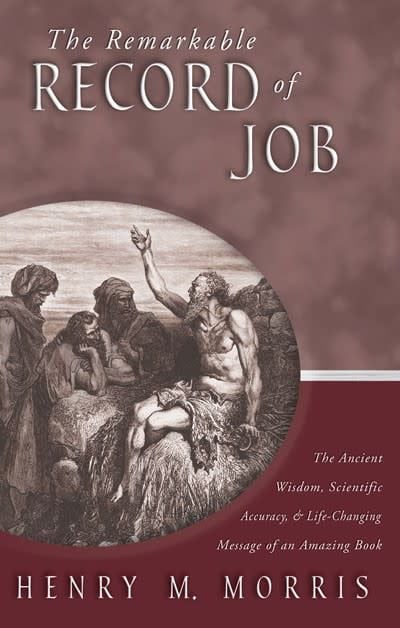
"Then Job answered and said, I know it is so of a truth: but how should man be just with God?" (Job 9:1-2)

The patriarch Job was the most "just" (i.e., "righteous") man of his age, according to the testimony of God Himself (Job 1:8; 2:3), yet his friends were insisting that his terrible suffering had been sent by God because of his sins. He knew he was innocent of the sins of which they were accusing him, and he knew he had earnestly tried to be obedient and faithful to God. Yet he also knew that he, like all men, had come far short of God’s holiness (Romans 3:23). "I have sinned," he had confessed, "what shall I do unto thee, O thou preserver of men?" (Job 7:20). "Cause me to understand wherein I have erred" (Job 6:24). And then comes the plaintive plea in our text. "How should a man be just with God?"

There is, indeed, no way by which a man can make himself righteous before God, for he is even born with a sin nature, inherited from father Adam. "If I justify myself, mine own mouth shall condemn me: if I say, I am perfect, it shall also prove me perverse" (Job 9:20). Yet God created man for His own glory (Isaiah 43:7) and wants "all men to be saved" (1 Timothy 2:4). The great enigma is, how can God justify unrighteousness in men and still be righteous Himself.

The answer, of course, is that God, in Christ, has paid the price to make us righteous by dying for all our sins. "God commendeth his love toward us, in that, while we were yet sinners, Christ died for us" (Romans 5:8). "In whom we have redemption through his blood, the forgiveness of sins, according to the riches of his grace" (Ephesians 1:7).

Even Job finally realized that God must somehow become his redeemer. "For I know that my redeemer liveth, and . . . in my flesh shall I see God" (Job 19:25-26). It is indeed wonderfully true that God can both "be just, and the justifier of him which believeth in Jesus" (Romans 3:26). HMM


The Latest
NEWS
The Flood Explains 18,000 Dinosaur Tracks in Bolivia
A new discovery of 18,000 individual dinosaur tracks in the Bolivian El Molino Formation contains the highest number of theropod dinosaur tracks in...

NEWS
Prolonged 40-Year Growth in T. Rex: Evidence for Pre-Flood Longevity?
An open access 2026 PeerJ research paper claims that T. rex took 40 years to reach its full adult body size, in contrast to a much shorter previous...

NEWS
Recent Discovery of a Strange Microbe Gives No Clues to Evolution
Research into God’s living creation is dynamic and always surprising. This is true whether one peers into the deepest reaches of space or dives...

NEWS
Built to Adapt: What Microbial Flexibility Reveals about Biological...
Imagine a machine that keeps working even when its parts change slightly or its surroundings shift. Most human-made machines would fail under that kind...

CREATION PODCAST
Scientists Ignored This DNA Pattern for DECADES! | The Creation...
Almost every living organism has tiny stretches of DNA that repeat over and over again. Scientists call these tandem repeats, and for a long time they...

NEWS
#1 Origins News Story of 2025: ICR Dr. Jeff Tomkins' Chimp Genome...
Research by ICR geneticist Dr. Jeff Tomkins was at the center of origins news in what has been called the “No. 1 Story for 2025.”1...

NEWS
Pterosaur Herbivory
The fascinating flying reptiles called pterosaurs are in the news again.1 In a not-so-surprising development, paleontologists have discovered...

NEWS
January 2026 ICR Wallpaper
"But those who wait on the LORD Shall renew their strength; They shall mount up with wings like eagles, They shall...

NEWS
Infrared Radiation and Pollination Reflects Recent Creation
by Jeffrey P. Tomkins, Ph.D., and Frank Sherwin, D.Sc. (Hon.)* The fascinating pollination of plants has been complex from the beginning of creation....

NEWS
Did Scientists Find "6 Million-Year-Old Ice" in Antarctica?
by Jake Hebert, Ph.D., and Frank Sherwin, D.Sc. (Hon.)* A small portion of surface ice in Antarctica is called blue-ice areas (BIAs), and for good...