



“For thus saith the LORD that created the heavens; God Himself that formed the earth and made it; He hath established it, He created it not in vain, He formed it to be inhabited: I am the LORD; and there is none else” (Isaiah 45:18).
This verse is the key proof-text for the “gap theory,” which attempts to accommodate the evolutionary “ages” of geology by placing them in a hypothetical gap between the first two verses of Genesis. Genesis 1:2 states: “The earth was without form” (Hebrew tohu), but Isaiah says, “He created it not in vain” (same word, tohu). Thus it is argued that the earth became “tohu” long after the primeval creation, as a result of Satan’s rebellion in heaven supposedly allowing the geological ages to be inserted between these two events.
Actually, the meaning of tohu is very flexible; it occurs 20 times and is translated 10 different ways, depending on context. In our text above, Isaiah was not writing about the initial state of the creation, but the purpose of the creation, that purpose being to provide a beautiful and appropriate home for mankind.
The translation “in vain” was required by Isaiah’s context, just as “without form” best fits the context in Genesis 1:2. There is no conflict, since the two passages are dealing with two different subjects, and Isaiah’s message simply extols God’s ultimate and certain goal for His creation.
When God first created the space/time universe, only the basic elements of the earth (Genesis 1:1) were created, with neither structure nor inhabitant, but that was not its full purpose. God had merely “created” the heavens according to this verse. But then, with great care, He formed the earth, made the earth and established the earth, and all this was done to make it ready to be inhabited by men and women who would share His image and know His love. HMM

Formed To Be Inhabited
More Days of Praise

Thy Word Is Settled Forever
“For ever, O LORD, thy word is settled in heaven.” (Psalm 119:89)
This is the central verse in the longest chapter in the longest...
The Dayspring from on High
“Through the tender mercy of our God; whereby the dayspring from on high hath visited us.” (Luke 1:78)
This is an unusual, but beautiful,...
I Will Build My Church
“And I say also unto thee, That thou art Peter, and upon this rock I will build my church; and the gates of hell shall not prevail against...
The Latest
Watching PBS: Don’t Think Too Hard About the Brain’s Origin!
This past summer, the British Broadcasting Corporation (BBC) addressed the subject of origins in the five-part television series Evolution.1...
The Engineering Behind Every Heartbeat
The human heart does not beat like a perfect clock. The time between beats changes as the body breathes, moves, rests, and reacts to the world around...
Blood Vessels: Built to Sense and Respond to Force
Blood vessels do more than carry blood. As tissue grows or heals, new vessels must form in the right place and direction, through a process called angiogenesis....
Hummingbird Hawkmoth Exhibits Astonishing Abilities
The incredible hummingbird hawkmoth (Macroglossum stellatarum), and other insects of the Lepidoptera order, continue to amaze entomologists.1,2...
More Than Just Parts: The Networking of Cells
An engineer can list every part in a system and still miss how it works. Think of a radio. Its parts matter, but so does the wiring that joins them....
Living Centenarian Sturgeon: Extreme Genesis Longevity Is Plausible
Native American oral tradition contains stories of sturgeon living for centuries. While this was largely seen as folklore among conventional scientists,...
Brainy Bees Solve Pollen Problem
The uncanny abilities of the honeybee cause entomologists to shake their heads in wonder.1,2
Scientists have long known that honeybees...
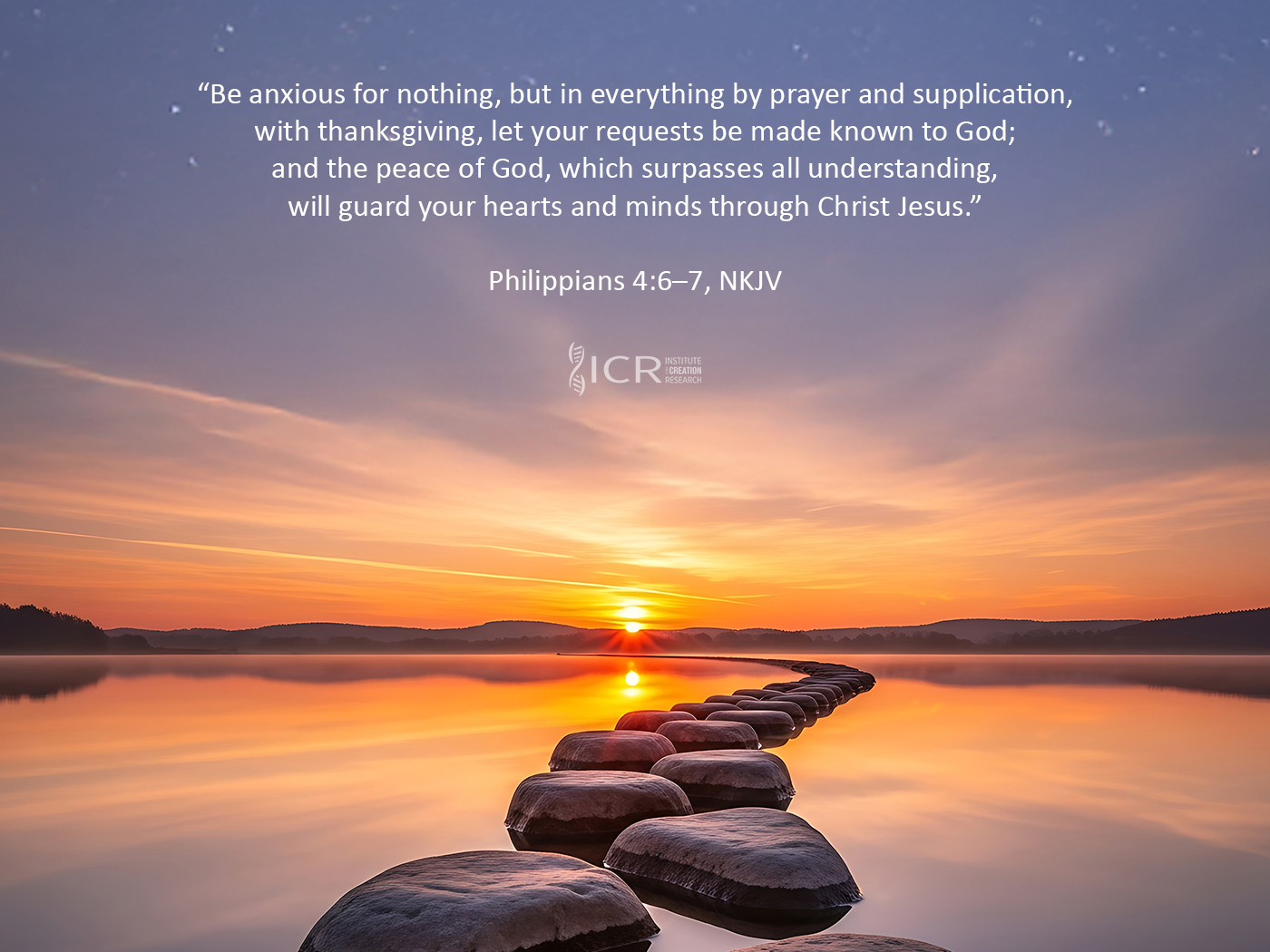
October Wallpaper
"Be anxious for nothing, but in everything by prayer and supplication, with thanksgiving, let your requests be made known to God; and the peace...
Possible Ark Site Has Mainstream Media Hopping
An organization named Noah’s Ark Scans is investigating a site called Durupinar, almost 20 miles from Mount Ararat in Turkey. Could it contain...
ANNOUNCEMENTS
Heroes of Creation Science: Henry M. Morris
“The creation/evolution issue is, in a very real sense, the most fundamental issue of all.” —Henry M. Morris
Many people believe the...
Shop Related Products
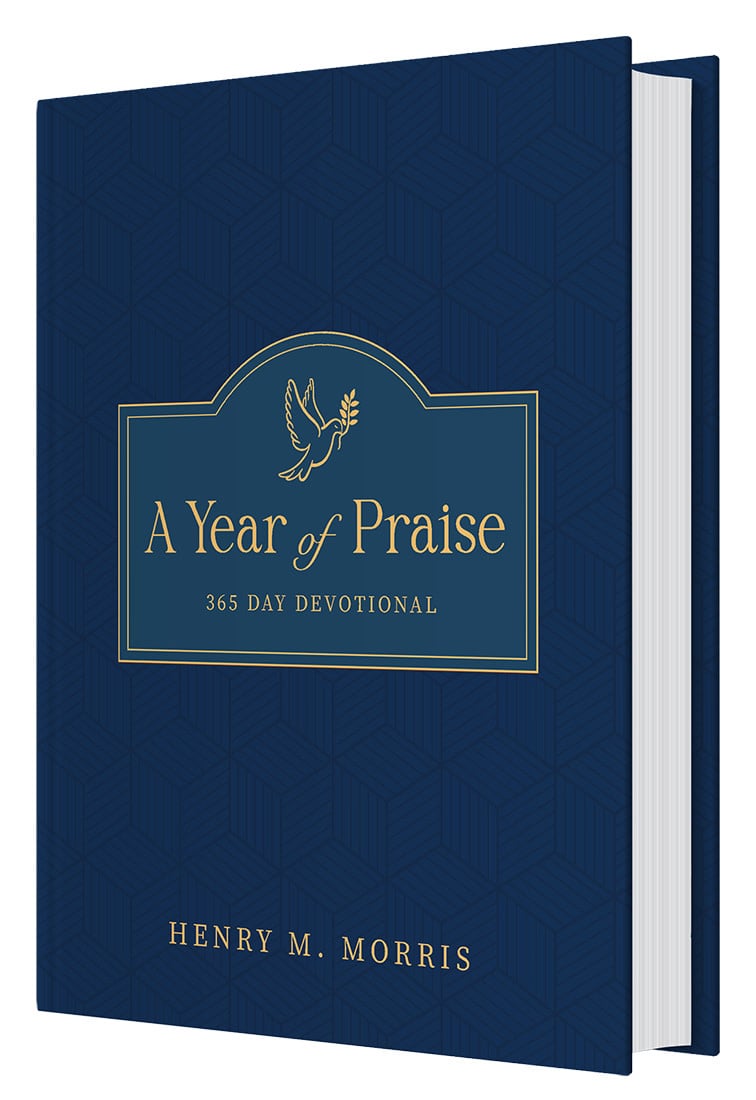
A Year of Praise
$14.99

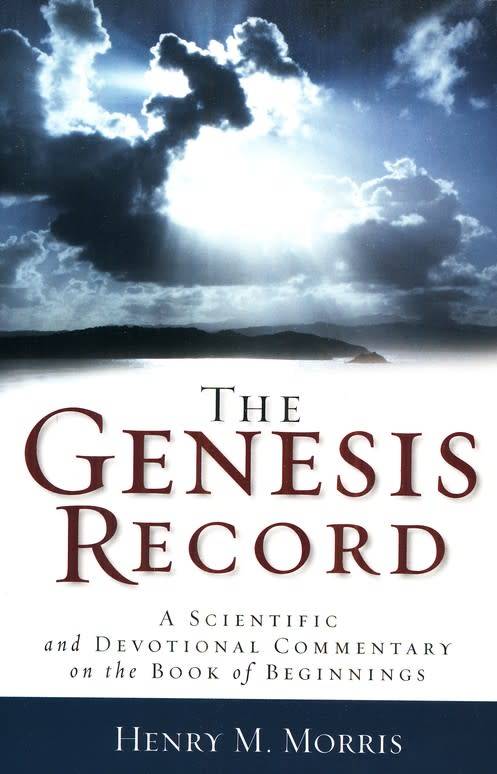
The Genesis Record
$47.99