


What would you think if you discovered a dust-covered iPhone next to a mummy inside an Egyptian coffin? You might suspect someone recently tampered with it, but you see no signs of that. Perhaps instead you consider that this mummy and therefore thousands of other ancient Egyptian artifacts were deposited after iPhones were invented. This would be too outlandish—unless researchers found more iPhones in more coffins. Then we might revise our concepts of ancient history.
This kind of mystery presents itself in the fossils I like to study. We find no modern tech inside fossil bones to make them look recently deposited, but we do find blood vessels, animal proteins, bone cells, and sometimes DNA. I’ve been keeping a list of published papers on such fossil soft tissue discoveries. The list contained 40 by 2013,1 85 by 2019,2 and grew to 122 in 2022.3
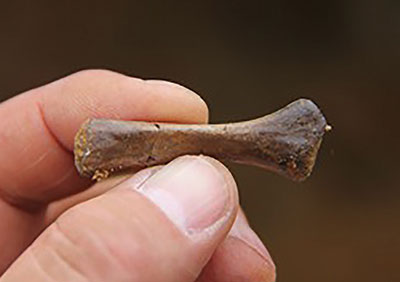
The ever-increasing soft tissue finds challenge the millions of years assigned to their fossils. Biomolecules like proteins and DNA decay and disappear in thousands of years, yet biomolecules are still present in all these fossils. In our most recent study, my colleagues and I tested a new protocol to measure protein decay,4 which adds to the protocols already used. Our results confirmed that the proteins decay relentlessly.
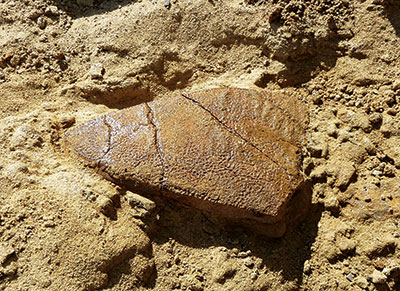
A turtle fossil has now joined the soft tissue list. Researchers described blood vessels they freed from extinct turtle and crocodilelike creatures by dissolving fossil bone.5 Weak acid dissolves bone mineral but not certain proteins. The team also took pictures of whole bone cells and used a silver stain to see the proteins extracted from the bones, further confirming the presence of original biomolecules.6
Our list of 122 fossil tissue discoveries feels like finding iPhones next to mummies in 122 coffins. Unlike finding anachronisms in just one place like northern Egypt, proteins in fossils represent time capsules from around the world. And like finding more than one type of out-of-time artifact, these biomolecules come from all kinds of animals. Land, sea, and sky creatures look like they were buried the world over only thousands of years ago.
“Teenage” is in this article’s title because these turtle and other fossils really do look young—like they belong to a teenaged world instead of an ancient one. “Ninja” is there because the fossils clash with the concept of millions of years. Like little iPhones in ancient coffins, biomolecules in teenage ninja turtles and so many other fossils suggest that evolutionary history needs a rewrite.
References
- Thomas, B. 2013. A Review of Original Tissue Fossils and Their Age Implications. Proceedings of the Seventh International Conference on Creationism. Pittsburgh, PA: Creation Science Fellowship.
- Thomas, B. and S. Taylor. 2019. Proteomes of the Past: The Pursuit of Proteins in Paleontology. Expert Review of Proteomics. 16 (11-12): 881-895.
- A colleague helps me curate an online list of soft tissue discoveries. See Thomas, B. and J. Tay. List of Biomaterial Fossil Papers, Google doc. This is free to view at tinyurl.com/4htm54w9.
- Thomas, B. et al. 2023. Attenuated Total Reflection Fourier Transform Infrared (ATR FT-IR) Spectroscopy Sensitivity to the Thermal Decay of Bone Collagen. Applied Spectroscopy. 77 (1): 53-61.
- Voegele, K. K. et al. 2022. Soft Tissue and Biomolecular Preservation in Vertebrate Fossils from Glauconitic, Shallow Marine Sediments of the Hornerstown Formation, Edelman Fossil Park, New Jersey. Biology. 11 (8): 1161.
- Silver ions cling to protein molecules as long as those proteins haven’t yet turned into some more resistant substance or into gases.
* Dr. Thomas is Research Scientist at the Institute for Creation Research and earned his Ph.D. in paleobiochemistry from the University of Liverpool.