


Christians often question what we call the “predator-prey problem”—animals that appear to be designed to prey upon others. For example, bats find and consume prey using sophisticated biological sonar equipment, and parasites devastate host bodies using biological cloaking techniques that mask their presence. Obviously, predation and parasitism were not part of God’s “very good” creation. Instead, they resulted from the Fall and the Curse, and creation biologists observe certain creatures interacting with each other in a host of fallen ways such as parasitism, predation, and competition. This was not always the norm, of course.
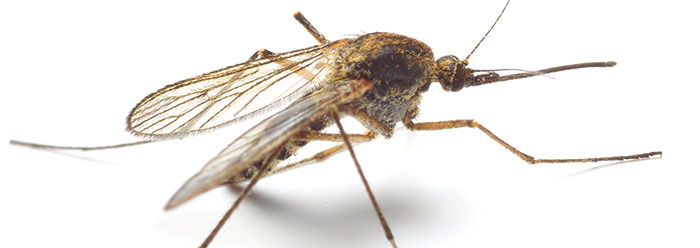
ICR biologists are currently looking at mosquitoes (family Culicidae) and their function before and after the Curse. Mosquitoes are good examples of insects that before the Fall were a functional and benign part of a “very good” ecosystem. They have since become vectors for some of the most devastating diseases in the world, such as malaria, Western equine encephalitis, yellow fever, dengue fever, and St. Louis encephalitis.
What was the purpose and function of the mosquito prior to the Fall? Biologists know the female must have a protein-based (blood) meal in order to aid in the production of eggs that are pure protein. Critics charge that mosquitoes biting Adam and Eve or animals can hardly be seen as part of a flawless creation. Plus, mosquitoes had to have existed from the beginning. So if they didn’t pierce Adam and Eve prior to the Fall, then how did they survive, and where did they get protein for egg production?
Answers to such questions are becoming evident. To begin with, the female mosquito has a very sophisticated and surgical collection of piercing mouthparts. These structures are designed to pierce and to suck. Today, the female mosquito takes in blood that contains the red-pigmented protein called hemoglobin. But in the days between the creation and the Fall, was there a non-person or non-animal source of protein from which the mosquito could feed? Yes. Leghemoglobin is an oxygen or nitrogen carrier found in plants such as alfalfa and soybeans. Like hemoglobin, leghemoglobin is proteinaceous, red, and has other chemical similarities. Could the female mosquito have fed on these plants in the days preceding the Fall and Curse? We know that is a good possibility because we have creatures such as the tiny aphid that have no problem successfully penetrating plant epidermis and feeding.
Obviously, there are other questions in regard to how the mosquito became a vector for diseases. Work is being done here—and in other areas—to answer these questions. For example, Plasmodium is the causative organism of malaria that kills hundreds of thousands every year. What was the purpose and function of this protozoon prior to the Fall? Could there have been a non-parasitic Plasmodium cycle intact since the beginning? Investigating various kinds of malaria may shed some light on these questions.
Much of the research conducted at ICR is driven by hypotheses based on what Genesis teaches. What were the mechanisms by which this change of state occurred from God’s perfect creation to our fallen condition today? As we continue this theoretical research, we hope we will see patterns that will help match theoretical answers to specific instances of predation and parasitism.
* Mr. Sherwin is Research Associate, Senior Lecturer, and Science Writer at the Institute for Creation Research.
Cite this article: Sherwin, F. 2013. Mosquitoes and the Fall. Acts & Facts. 42 (3): 9.