


''Blood Worm Moon'' Total Lunar Eclipse 2025 | The Institute for Creation Research


''Blood Worm Moon'' Total Lunar Eclipse 2025

Barring cloud cover, about 75% of the country saw the total lunar eclipse, aka the “Blood Worm Moon.” Texas had good weather conditions for last night’s display, as did the lower Great Lakes, Ohio Valley, and a portion of the Central Plains.

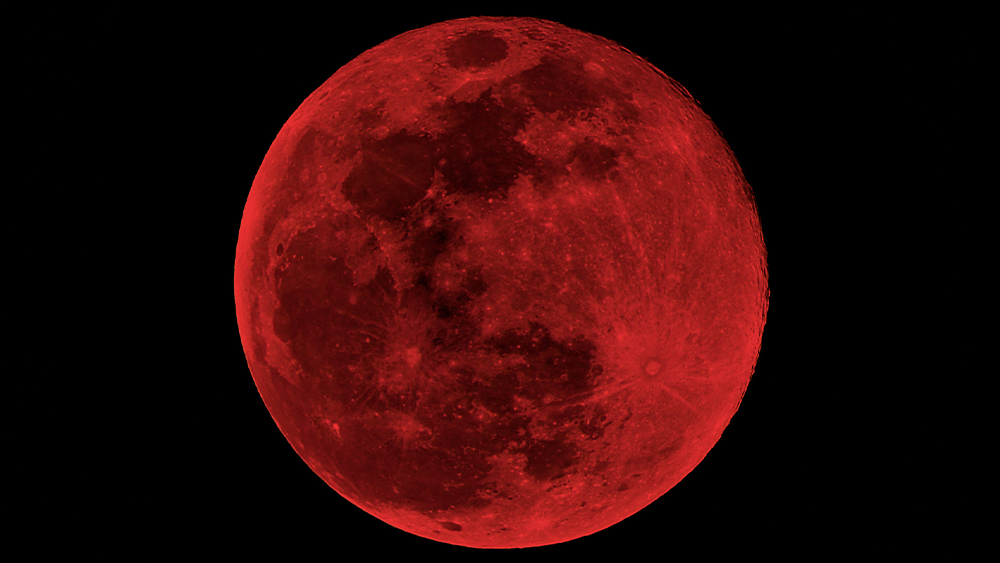
In a lunar eclipse, the shadow of Earth blocks most of the light that illuminates the surface of our moon. This eclipse began at 11:26 p.m. (PST) on Thursday, March 13, or at 2:26 a.m. (EST) Friday, March 14, and lasted over an hour (compared to last year’s total solar eclipse of just a few minutes).

The strange title “Blood Worm Moon” comes from the moon’s red appearance when the moon moves through Earth’s umbra (the darkest, innermost part of its shadow). It looks red because the sunlight that still reaches the moon is filtered through Earth’s atmosphere. This filtered light, especially the orange and red wavelengths, covers the moon in an orange/red hue—the “blood moon.” It was thought earthworms appear at about this time because the ground thaws from winter, ergo the title “Blood Worm Moon.”

This was the first total lunar eclipse visible anywhere in the world since November 2022.

Creationists see God’s hand in this fascinating celestial display. He designed the moon in such a way that the earth-moon pair has unique proportions not found anywhere else in our solar system. The moon also has a unique orbit around the earth, allowing us to view both solar and lunar eclipses. For example, the moon is 400 times smaller and 400 times closer than the sun. Coincidence? Hardly. Such a ratio is why we have spectacular total lunar eclipses given to us by the Creator, the Lord Jesus Christ.

We hope you enjoyed the "Blood Worm Moon" and remember who put it there for our enjoyment.

* Dr. Sherwin is a news writer at the Institute for Creation Research. He earned an M.A. in invertebrate zoology from the University of Northern Colorado and received an honorary doctorate of science from Pensacola Christian College.


The Latest
NEWS
Insect Eyes Reflect Creation
Research into insect eyes continues to reveal amazing structure and function. For example, although fruit flies’ eyes are attached firmly to their...

NEWS
February 2026 ICR Wallpaper
"Be strong and of good courage, do not fear nor be afraid of them; for the LORD you God, He is the One who goes with you. He will not leave you...

NEWS
Microgravity's Effect on Bacteriophages Is Not Evolution
The word evolution is often used imprecisely, leading the public to believe that any biological change is evolution, and, therefore, it’s a fact.1...

NEWS
Engineered for Extremes: The Hidden Precision of a Salt Lake...
Water that is nearly five times saltier than the ocean is deadly to most animals. But in Utah’s Great Salt Lake, scientists have found a tiny...

CREATION PODCAST
Giant Sequoias: Too Complex to Be Accidental | The Creation Podcast:...
What living thing grows taller than a 25-story building, survives raging wildfires, and actually depends on those fires to reproduce? Giant sequoias...

NEWS
Bound by Design: How a Universal Temperature Law Reveals Life’s...
What if every living creature—from coral reefs and cold-water fish to mountain flowers and desert reptiles—followed the same hidden temperature...

NEWS
The Flood Explains 18,000 Dinosaur Tracks in Bolivia
A new discovery of 18,000 individual dinosaur tracks in the Bolivian El Molino Formation contains the highest number of theropod dinosaur tracks in...

NEWS
Prolonged 40-Year Growth in T. Rex: Evidence for Pre-Flood Longevity?
An open access 2026 PeerJ research paper claims that T. rex took 40 years to reach its full adult body size, in contrast to a much shorter previous...

NEWS
Recent Discovery of a Strange Microbe Gives No Clues to Evolution
Research into God’s living creation is dynamic and always surprising. This is true whether one peers into the deepest reaches of space or dives...

NEWS
Built to Adapt: What Microbial Flexibility Reveals about Biological...
Imagine a machine that keeps working even when its parts change slightly or its surroundings shift. Most human-made machines would fail under that kind...