



“So God created man in his own image, in the image of God created he him; male and female created he them.” (Genesis 1:27)
The first chapter of Genesis is the foundational chapter of the Bible and, therefore, of all true science. It is the great creation chapter, outlining the events of that first week of time when “the heavens and the earth were finished, and....God ended his work which he had made” (Genesis 2:1-2). Despite the evolutionists, God is not creating or making anything in the world today (except for special miracles as recorded in Scripture) because all His work was finished in that primeval week. He is now engaged in the work of conserving, or saving, what He first created.
There are only three acts of special creation—that is, creation out of nothing except God’s omnipotent word—recorded in this chapter. His other works were those of “making” or “forming” the created entities into complex, functioning systems.
His first creative act was to call into existence the space/mass/time cosmos. “In the beginning God created the heaven and the earth” (Genesis 1:1). This is the domain that we now study in the physical sciences. The second is the domain of the life sciences. “God created...every living creature that moveth” (Genesis 1:21). It is significant that the “life” principle required a second act of direct creation. It will thus never be possible to describe living systems solely in terms of physics and chemistry.
The third act of creation was that of the image of God in man and woman. The study of human beings is the realm of the human sciences. Our bodies can be analyzed chemically and our living processes biologically, but human behavior can only really be understood in terms of our relation to God, whose image we share. HMM
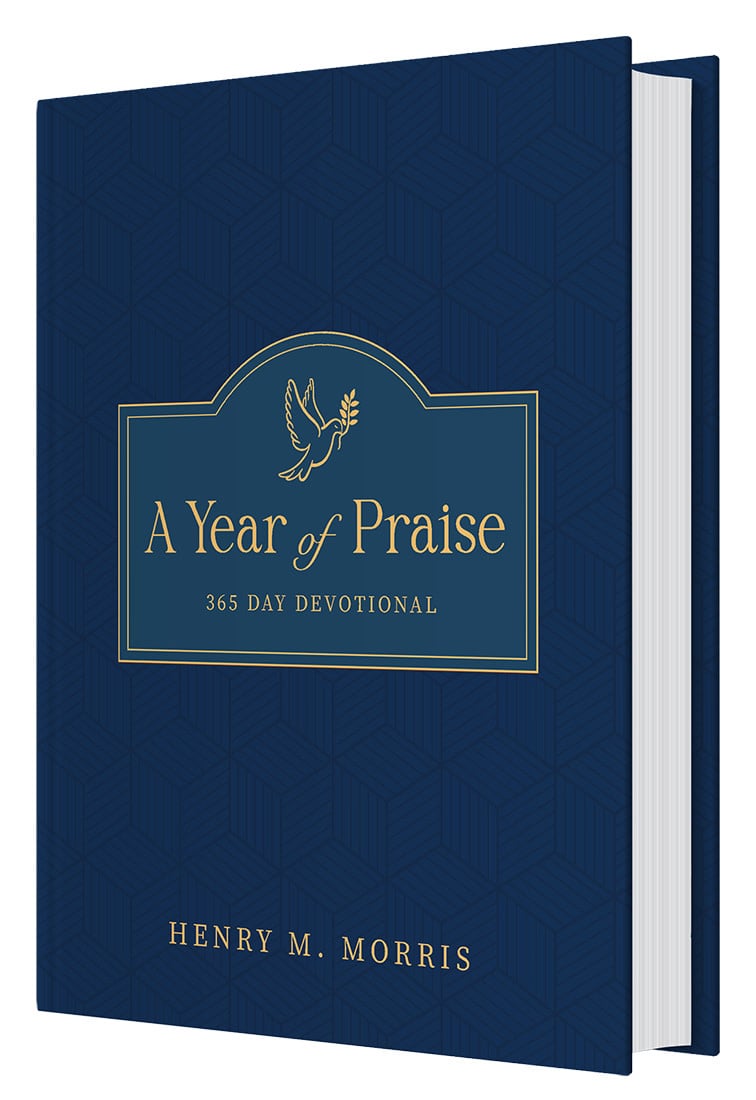
 Days of Praise Podcast is a podcast based on the Institute for Creation Research quarterly print devotional, Days of Praise. Start your day with devotional readings written by Dr. Henry Morris, Dr. Henry Morris III, Dr. John Morris, and others to strengthen and encourage you in your Christian faith.