


Flowers are as beautiful as they are complex. Flowers (Anthophyta) are designed with a receptacle (axis) upon which are found the carpel (ovary, style stigma) and stamen (filament and anther). The petals provide colorful aesthetic value while nectar guides within the petals can only be seen by pollinating insects that are able to see in the ultra-violet range.
The ongoing puzzle for evolutionary botanists is the origin of the flowering plants, an “abominable mystery” to Charles Darwin.1 In addition, they ask how the flowering plants evolved such great diversity so rapidly?
Through the decades, one-hundred percent flowering plant fossils (as opposed to non-flowering) have been discovered in the sedimentary rocks such as a “145 million-year-old” perfect flower (Euanthus) in China in 2016.2
In November 2021, it was reported the discovery of Florigerminis jurassica, a “164 million-year-old” fossil composed of the flower bud, fruiting body, and leafy branch—all in excellent condition.3 How does this discovery help answer the centuries-old mystery of flowering plant origin? Indeed, Cui et al stated, “Florigerminis jurassica underscores the presence of angiosperms in the Jurassic [over “145 million-years-ago”] and demands a re-thinking on angiosperm [flowering plants] evolution.”2 Traditionally, the discovery of a fossil flowering plant is accompanied by cautious statements such as “could be the answer to flower evolution” or “could be the transitional stage”—but they are just flowers with no indication as to how they evolved from a non-flowering plant.
So, this finding hardly eases the pain of the centuries-old enigma of flowering-plant origin. It simply pushes their origin lower in the geologic column. Creationists maintain this evidence points to creation: the first flowering plants are well-designed to move in and fill niches and multiply after their kind.
No wonder evolutionists continue to say, “How flowers came to be has been an intensely debated mystery.”4
Seed-bearing plants were created thousands of years ago at the beginning of Day 3 of the creation week.5
References
1. Tomkins, J.P. and T. Clarey. 2018. Darwin's Abominable Mystery and the Genesis Flood. Acts & Facts. 47 (6).
2. Liu, Z. and X. Wang. 2016. A perfect flower from the Jurassic of China. Historical Biology. 28(5): 707-719.
3. Cui, D. et al. 2021. Geological Society London Special Publications. A Jurassic flower bud from the Jurassic of China.
4. Fu, Q. et al. 2018. An unexpected noncarpellate epigynous flower from the Jurassic of China. eLife.
5. Genesis 1:11-13.
Image: Florigerminis jurassica
Image Credit: Copyright © NIGPAS. Used in accordance with federal copyright (fair use doctrine) law. Usage by ICR does not imply endorsement of copyright holder
*Dr. Sherwin is Research Scientist at the Institute for Creation Research. He earned an M.A. in zoology from the University of Northern Colorado and received an Honorary Doctorate of Science from Pensacola Christian College.
Oldest Fossil Flower Bud and Branch Discovered
More Living Creatures Were Equipped to Adapt
Did Earthworms Rewrite Their DNA to Survive on Land?
An earthworm news story was recently posted that openly questions Darwin’s gradual and slow evolutionary progress in the living world.1...
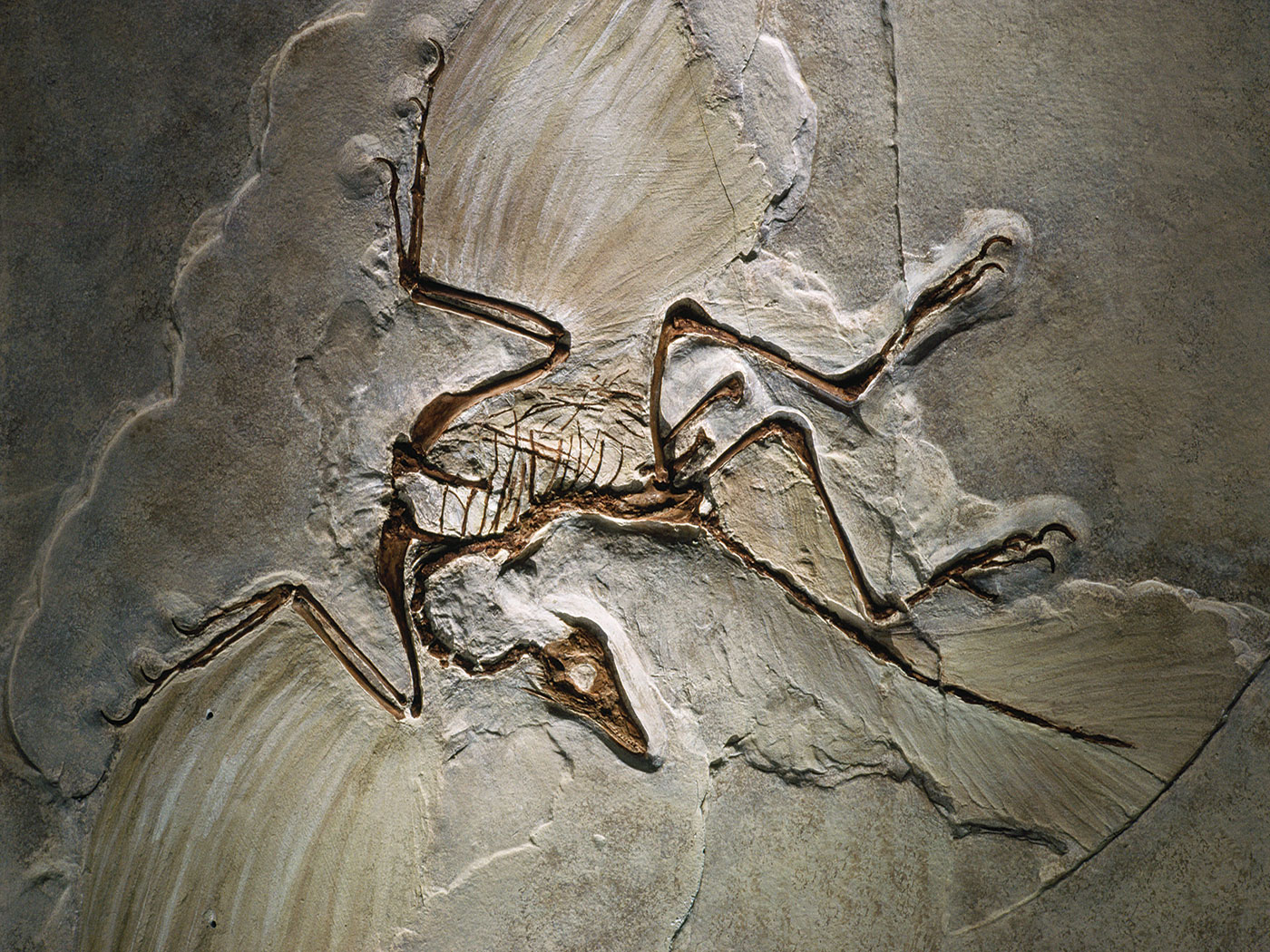
Did Fossil Birds Live Longer than Today's Birds?
The Bible matter-of-factly states that humans living before and shortly after the Genesis Flood had centuries-long lifespans (Genesis 5 and 11). Yet...

The Jaw-Dropping Design in Hawaii's State Fish
Hawaiians call their state fish the humuhumunukunukuapua’a, or humuhumu for short, and snorkelers marvel at its wild paint job as it flits...
More Creation Science Update

December 2025 ICR Wallpaper
"Come now, and let us reason together," Says the LORD, "Though your sins are like scarlet, They shall be as white as snow; Though they...
The Moon: Formed in Just Hours?
Despite the moon’s apparently simple shape, uniformitarian scientists have long had great difficulty explaining how it could form by natural processes...

Discover the Evidence that Exists for the Bible!
For generations, the Bible has faced skepticism and challenges to its credibility. Critics have questioned whether it is merely a collection of stories...
The Latest
The Incredible Narwhal Tusk
Most of us are familiar with the narwhal, a bizarre arctic mammal that sports a long, twisted tusk, earning the creature its nickname, the unicorn of...
Can Metals Explain the Origin of Life?
A spark plug can make a spark, but no one would say a spark plug can build a car. In much the same way, a chemical reaction can do one useful job without...
Jumping Genes: Engineered to Move
Scientists recently found a “jumping gene” in an odd place. An RNA molecule from a tiny predatory bacterium had entered the cells of a very...
Institute for Creation Research Partners with Louisiana Baptist...
The Institute for Creation Research (ICR) announced today a strategic handover of its School of Biblical Apologetics (SOBA) educational content to Louisiana...
A Tangled Human Tree—or One Human Family?
What if the “ghosts” in our DNA are not lost steps in human evolution? A new Science study found DNA patterns that may point to two unknown...
Mapping the Sense of Smell
Your sense of smell involves much more than enjoying a hike through an aromatic pine forest or appreciating delicious foods.1,2
Our ability...
September 11, 2001: We Will Never Forget
“Fret not thyself because of evil men, neither be thou envious at the wicked: for there shall be no reward to the evil man; the candle of the...
What Can Fossil Teeth Really Tell Us?
A few tiny fossil teeth have been asked to carry a very large story. Researchers used them to name a new order of marsupials, Keeunamorphia, and to...
Man and His Labor
“Man goeth forth unto his work and to his labour until the evening.” (Psalm 104:23)
The 104th Psalm is a beautiful psalm of creation and...
Changing Climates, Stable Primates
What do you picture when you think of the first primates? Conventional scientists have long proposed warm forests, thick vines, and tropical heat as...
Shop Related Products

$