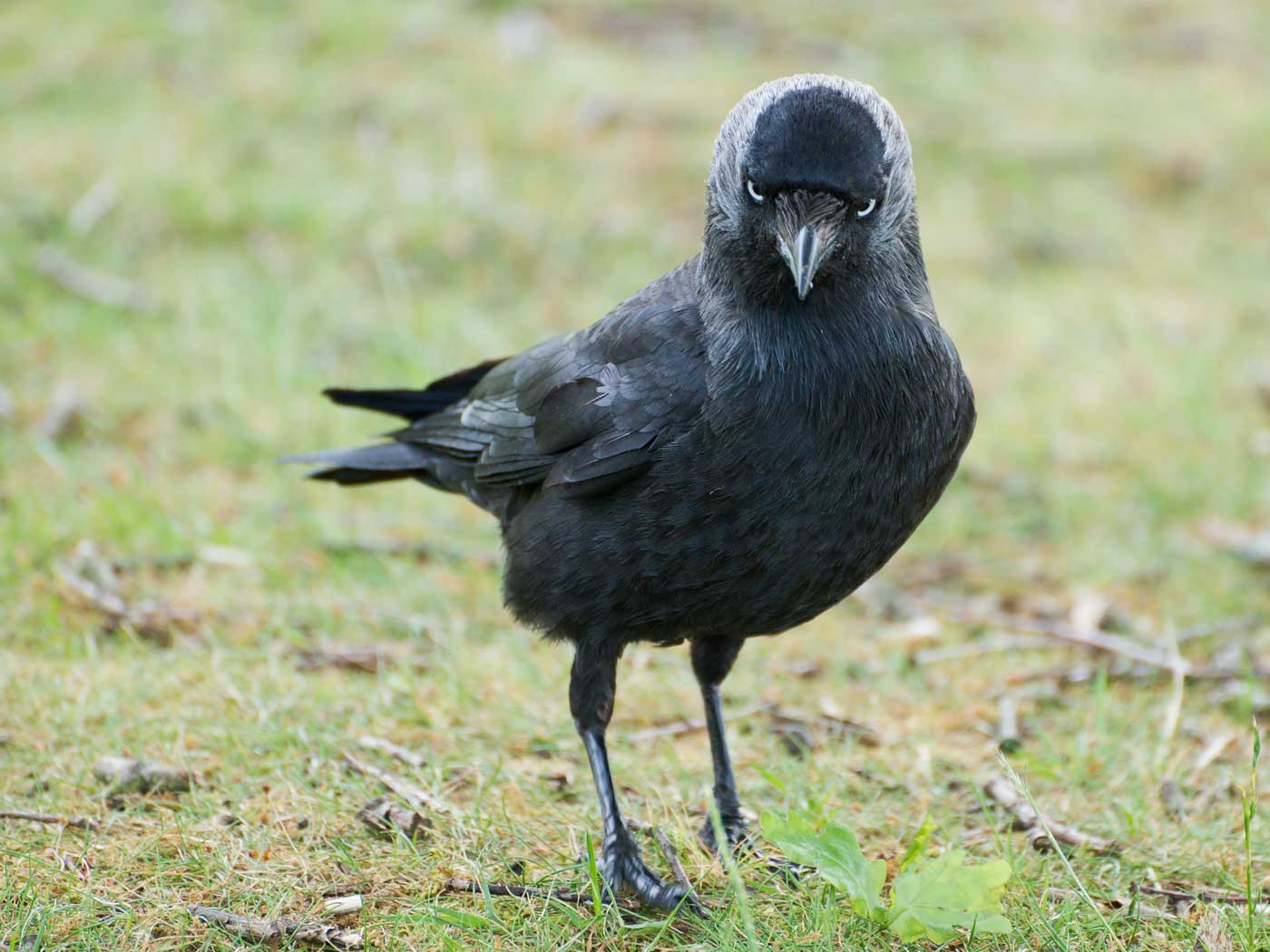



As the naturalist on the Beagle, Charles Darwin made numerous valuable observations of as yet undiscovered plants and animals. Along the way, the Beagle anchored for an extended stay in the Galapagos Islands, 600 miles off the western coast of South America. While the crew mapped these rugged volcanic islands, Darwin studied the unique animals living there, especially the numerous varieties of finches, today classed as fourteen different species. Numerous features suggested to Darwin that these birds were related to each other and related to similar birds in South America. Yet they showed significant differences between them, including some features not found in South America. Of particular interest were the beaks. Some were small, others parrot-like. Some were curved, one had a boring beak.
Some creationists of Darwin's day held to the absolute immutability of species, that God had created each species for each specific ecological habitat, and no significant changes had ever occurred or could ever occur. But, to Darwin, these animals appeared to be related and now showed much variety. They further appeared to have migrated from South America and acquired other traits after arrival. He could not reconcile the evidence with this particular creationist teaching. Thus his concept of evolution by natural selection began to take form.
But today's creationists, and even some in Darwin's day, freely allow for limited change within created kinds, or basic categories. It is within the creationist model to propose that the present varieties of finch descended from one or more ancestral categories of finch and that migration of animals into new areas can and does happen. Creationists agree fully with Darwin over the finches. But they disagree with the wholly unsupported evolutionary speculation that finches evolved from fish and ultimately from single-celled organisms. Rather, the evidence better fits the idea that each basic category of animal was created as that category. Changes are limited by the genetic information present at the start.
What, then, are we to make of the recent newspaper articles worldwide proclaiming that a new study of finches and their beaks have shown "Darwin was Right"? A team of Princeton scientists have won a prestigious award for 20 years of study of the finch's beaks on one tiny island in the Galapagos chain, home of only a few finch species, and a best-selling novel entitled The Beak of the Finch tells their story and explains their findings. Just what was found?
The two scholars, Drs. Peter and Rosemary Grant observed how, under drought conditions, birds with larger beaks were better adapted than others, thus their percentage increased. But this trend reversed when the cyclical conditions reversed. Furthermore, in times of drought, the normally separate species were observed to cross-breed. They are related after all. Darwin was right!
But is this really evolution? Even after the changes there is still the same array of beak sizes and shapes. This is variation and adaptation, not evolution.
Actually, de-evolution has occurred; the observation is that there are larger groupings of species into what may be more reminiscent of the originally created kind. Creation agrees with Darwin's observations and with the newer observations, but evolution doesn't, even though the Grants interpret this as rapid evolution. Wonderful study-great data, wrong interpretation.
*Dr. John Morris is the President of ICR.