


Creation Physics [Podcast] | The Institute for Creation Research

Creation Physics [Podcast]

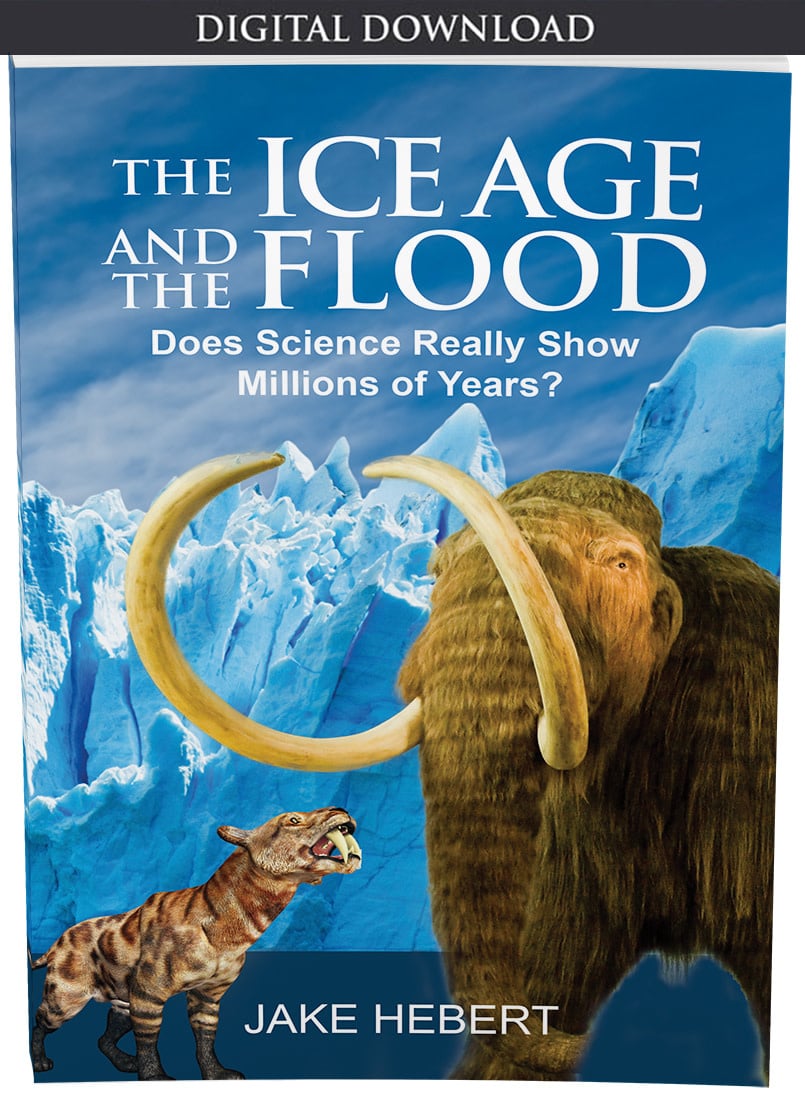
Did God use the Big Bang to create the universe? Can we know the age of the earth? ICR physicist Dr. Jake Hebert explores the origin of the universe, recent Ice Age studies, and the relevance of earth age research. Also, learn more about Dr. Hebert as he shares his personal creation journey.

1) A Universe from Nothing?

Many famous secular physicists claim we don’t need a Creator to explain the universe’s origin. They say “the laws of physics created the universe,” or, “the universe could have created itself.” Dr. Hebert offers four compelling reasons why this is not a scientific claim.

2) Why the Age of the Earth Matters

Is the universe billions of years old—or only thousands? Many Christians are uncomfortable with the idea of recent creation because they think science has “proven” otherwise. Is this a worthy battle? Can science prove the age of the universe?

3) Dissecting an Argument for the Big Bang

Secular scientists claim the universe came into existence through a cosmic explosion called the Big Bang. Some Christians try to argue that God used the Big Bang to create the universe. But what does the Bible say? And what are the scientific arguments?

4) My Creation Journey

Dr. Hebert’s pursuit of creation research ministry started early in life. Learn about his early interest in science, middle school doubts about Christianity, and the book that changed the course of his personal and professional life.

5) Ice Age and Seafloor Sediments

Seafloor sediments and dating methods may not seem like terribly exciting icebreaker topics. So, why does this field of research interest Dr. Hebert and the ICR science team? And how does it relate to our study of the Ice Age?




For more radio programs, click here.

The Latest
CREATION PODCAST
The Complex Shape of DNA You’ve Never Been Taught | The Creation...
If you could stretch out the DNA in just one of your cells, it would be six feet long! And yet, it fits inside a space smaller than the tip of a needle...

ACTS & FACTS
Novel Orphan Genes Aid in Regulated Adaptation
Orphan genes (OGs) are genes that are unique to a specific kind of creature. This is especially significant when creatures that are considered evolutionary...

ACTS & FACTS
Sickle Cell Research Confirms TOBD Prediction: Directed Genetic...
Students of the creation-evolution debate know the changing explanations for how creatures originated and operate. Originally, the great minds of most...

NEWS
A New Year's Resolution
“For I determined not to know anything among you, save Jesus Christ, and Him crucified.” (1 Corinthians 2:2) When Paul first entered...

NEWS
The Lord Jesus: The Gift of Christmas
“Therefore God also has highly exalted Him and given Him the name which is above every name, that at the name of Jesus every knee should bow,...

NEWS
Garments for the King
“All thy garments smell of myrrh, and aloes, and cassia, out of the ivory palaces, whereby they have made thee glad.” (Psalm 45:8) One...

NEWS
Bold Claim, Hidden Design: What Salterella Reveals About Early...
What if a fossil no bigger than a grain of rice showed engineering so precise that it still puzzles scientists? That is the intrigue surrounding Salterella,...

CREATION PODCAST
Black Holes are BREAKING the Big Bang! | The Creation Podcast:...
Space is full of some of the strangest and most breath-taking objects in existence. Among them, black holes sit right at the top of the list. They're...

NEWS
Where Did Most of Earth's Species Come From?
Evolutionary naturalism is locked into seeing the entire living world as having evolved from a single common ancestor many millions of years ago.1...

NEWS
A Molecular Snowmobile
People following—or actively involved in—creation science are no doubt aware of the incredible molecular motor called the flagellum,1,2...