


Workers with the Canadian energy company Suncor unearthed ankylosaur remains while mining oil sands near Fort McMurray in Alberta. The carcass of the four-legged land creature was not flattened, as is the case with many fossilized vertebrates. But most strangely, it was found in an area known primarily for fossilized marine creatures.
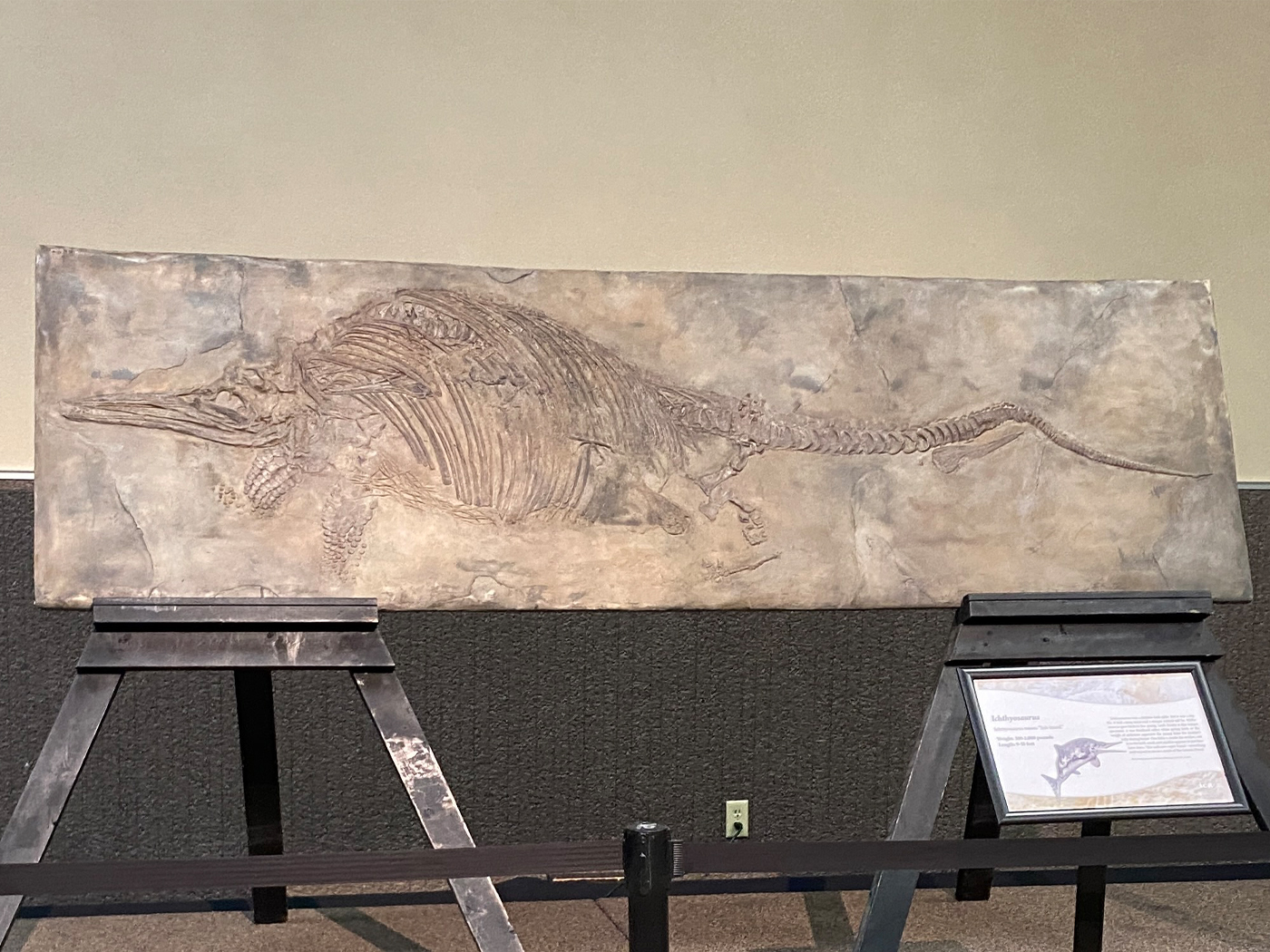
Previous vertebrate fossils found in this oil sand formation were marine reptiles, like the ichthyosaur and plesiosaur. Marine invertebrates such as clams and ammonites are the more typical fossils found in the region, so a large, land-living ankylosaur "wasn't supposed to be there."1
But finding a mixture of fossilized marine and land creatures together is not an unusual occurrence. For example, the famous dinosaur beds in the Morrison Formation at Dinosaur National Monument contain logs, clams, snails, and mammals.2
And the Institute for Creation Research's front lobby features a juvenile hadrosaur taken from the Two Medicine Formation…a sandstone formation which extends from the east side of the Rocky Mountains eastward to Edmonton, Canada…that was fossilized alongside marine clams and snails, as well as birds, mammals, and other dinosaurs.
Medical doctor Carl Werner actually used fossil-related criteria as a test for evolution.2 He reasoned that if the evolutionary story were true and that dinosaurs lived in a unique "Age of Reptiles," and if everyday natural processes were responsible for their fossilization, then no fossils of creatures from other "ages"…for example, creatures that had not yet evolved…should be mixed up with dinosaur fossils.
But Werner found that a fossil mixture of very different kinds was typical. He told Creation magazine:
Paleontologists have found 432 mammal species in the dinosaur layers….But where are these fossils? We visited 60 museums but did not see a single complete mammal skeleton from the dinosaur layers displayed at any of these museums.3
Werner also learned that dinosaur-containing rock layers have "fossilized examples from every major invertebrate animal phylum living today," and that dinosaurs were mixed in with varieties of fish, amphibians, "parrots, owls, penguins, ducks, loons, albatross, cormorants, sandpipers, avocets, etc."3 If museums displayed these real fossils instead of adorning dinosaur dioramas with feathers, then the evolutionary story that "dinosaurs evolved into birds" would be quickly seen as the fiction that it is.4
There are many other examples of land-dwelling dinosaur fossils mixed with sea creatures.5 This kind of evidence is to be expected if a world-destroying flood was responsible for the bulk of the world's fossils, dinosaur and otherwise, considering that "the waters prevailed exceedingly upon the earth; and all the high hills, that were under the whole heaven, were covered."6
References
- Gordon, J. Rare dinosaur found in Canada's oil sands. Reuters, March 25, 2011.
- Werner, C. 2008. Living Fossils. Evolution: The Grand Experiment, vol. 2. Green Forest, AR: New Leaf Press.
- Batten, D. 2011. Living Fossils: a powerful argument for creation. Creation. 33 (2): 22. Emphasis in original.
- Thomas, B. Fixed Bird Thigh Nixes Dino-to-bird Development. ICR News. Posted on icr.org June 22, 2009, accessed April 13, 2011.
- Thomas, B. Canadian 'Mega' Dinosaur Bonebed Formed by Watery Catastrophe. ICR News. Posted on icr.org July 13, 2010, accessed April 6, 2011.
- Genesis 7:19.
Image credit: National Park Service
* Mr. Thomas is Science Writer at the Institute for Creation Research.
Article posted on April 14, 2011.